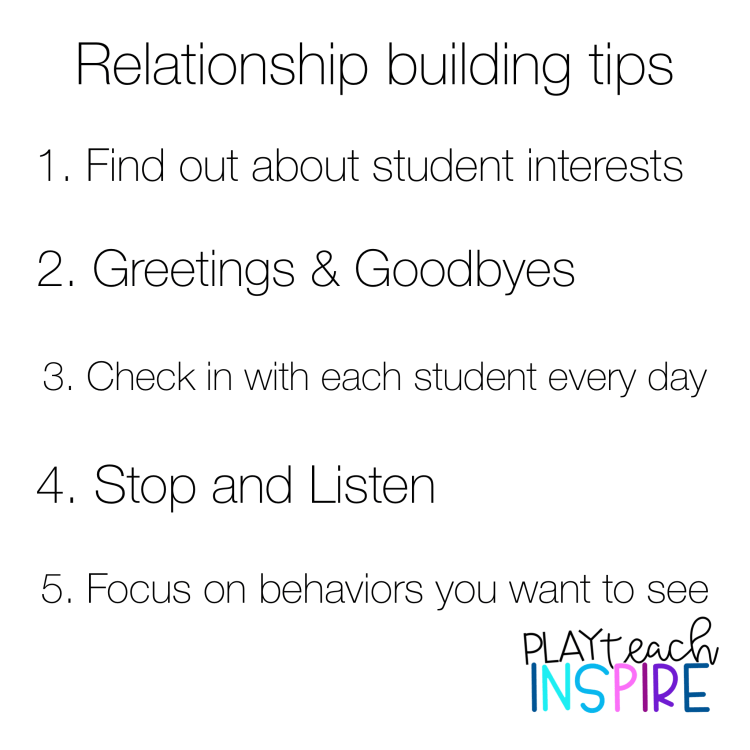
I’ve had a few people DM me on Instagram and ask me how I create relationships with my students. We all know that relationships are the foundation of any successful teaching that will occur in your classrooms! Here are 5 simple strategies I use to help develop and strengthen my relationships with students (including those that are hard to reach or have been through trauma).
1. Find out about their interests – this can be as simple as an interest survey at the beginning of the year. What you teach is important but what parents and students really want to know is that you care and that your students are physically and emotionally safe with you in your classroom. When I taught older kiddos, I created an “all about me” for them to fill out as a way to find out their interests. The last question was always, “What do you want me to know about you?” With teaching preschoolers now, I have a quick parent questionnaire that I do over the phone, in person, or via email to find out things like their child’s favorite snack (I strive to make sure we have everyone’s favorite snack within the first few weeks of school, even if it means buying it myself). The last question I ask the parents is always “What do you want me to know about your child?”
2. Greetings and Goodbyes- Greet every child as they come in and make sure to let them know that you are happy and excited to see them at school each day. Likewise, say goodbye to every child as they leave. My students get to pick if they want a hug, handshake, high five, or fist bump. There is always the option for them to wave as well if they don’t want to do any of those. Does it mean you may need to pack up a little earlier? Possibly, but I promise those few minutes of interaction every day will do more for your students and their learning overall than anything you could be squeezing in to teach for those five minutes at the end of the day.
3. Check in with each student every day – spend time having a 1:1 conversation with every child. Make eye contact. Follow up with something they told you the day before. It doesn’t need to be long, it just needs to be meaningful. Think of the times in the schedule when you can squeeze these in: arrival, lunch, snack, transitions, dismissal, etc. If you have a student who is really struggling behaviorally, use Raymond Wlodkowsi’s 2×10 strategy: spend two minutes a day for 10 days in a row having non-academic conversations with them. You can check out his study for all of the results but they were pretty significant.
4. Stop and Listen – it’s as simple as it sounds. If a student is telling you something, no matter how trivial, it’s because it’s important to them. Stop and listen as often as you can. It will help them to know that you care and will help you learn more about them.
5. Focus on the behaviors you want to see increase – Praise them for whatever it is you want them to do. Praise them for completing each step along the way. Let them choose their classroom incentives or rewards they want to work for. Use selective ignoring appropriately. This doesn’t mean your room is a free for all, it just means you stop nit-picking every little thing.
These are five strategies I use when building and strengthening relationships with students. I’d love to hear yours! Drop me a comment with your favorite strategy to use!
#traumainformedcare #selfregulation #socialemotionallearning #momlife #teachermom #teacherblogger #teacher #teachersfollowteachers #teachersofinstagram #iteachtoo #iteachpreschool #boymom #integratedpreschool #specialeducation #specialeducationteacher #teacherlife #worklifebalance #earlychildhoodeducation #mommy #spedteacher #preschool #earlychildhoodeducator #teachertribe #teachersofig #teachersofinsta #weteachsped
 The Purposeful Classroom